
In Part One of our conversation with Russ Hudson, we explored how contemplation and the Enneagram weave together. Here, we dive deeper into Russ’s personal journey, his research into the roots of the Enneagram, and the resources he offers for students of this path.
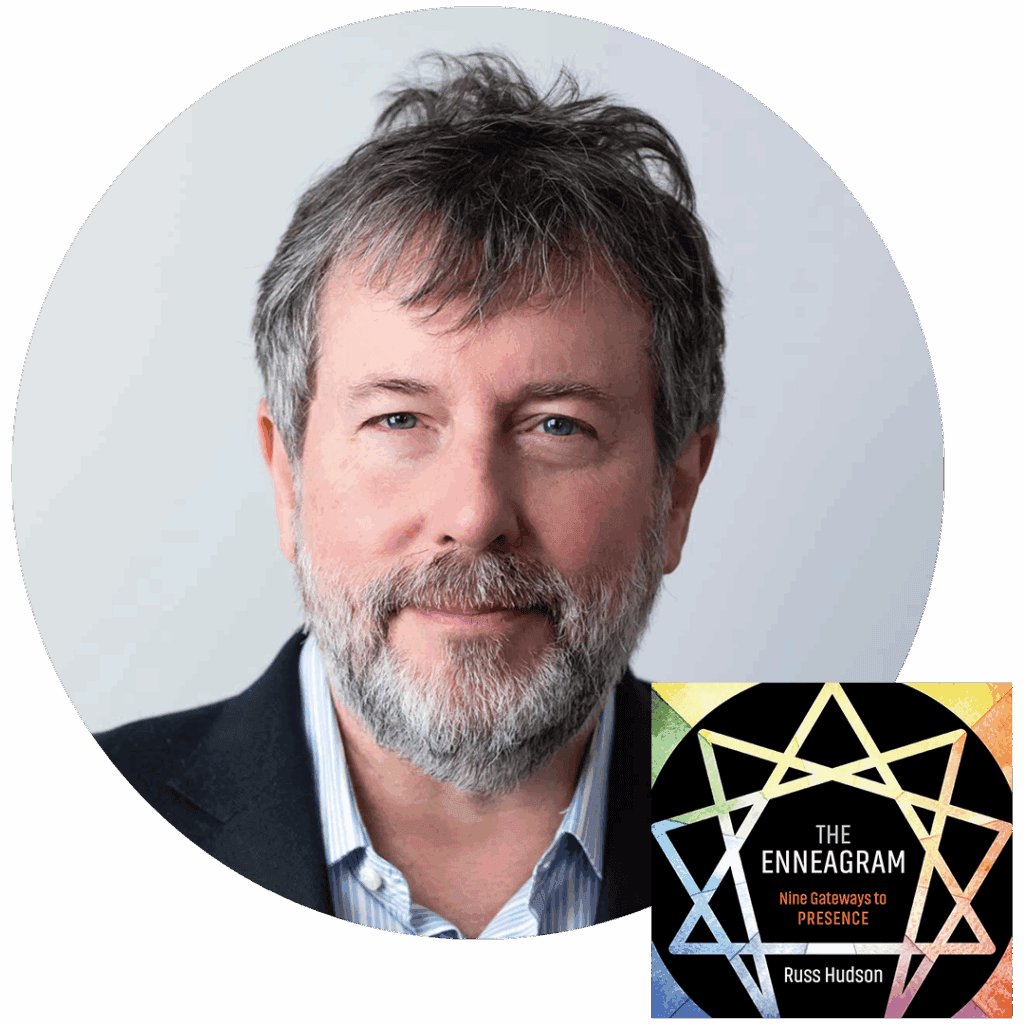
The Enneagram is a guide to psychological and spiritual growth. How did it come about that, as a teacher, you emphasize contemplation and meditation too?

Russ Hudson: When I initially encountered the Enneagram, I didn’t first learn about the nine Types, which is what most people know about it today. Instead, I learned the Enneagram through the Gurdjieff Work. I studied with some of the people who lived with Mr. George Gurdjieff for many years, and it was explicitly part of a contemplative and meditative tradition there. You may know that Mr. Gurdjieff is the person who introduced the Enneagram symbol to the modern world.
The way I learned the Enneagram at that time was as a tool to help us remember ourselves — to come back to presence, to come back to the here and now, where we encounter grace.
“At the center of the original Enneagram is the question: what distracts us?”
Learning it that way, I found that beyond just being a description of a kind of person, the Enneagram was even more helpful in indicating certain tendencies of mind and emotion, or habits, that tend to take us out of contemplative awareness. That was how I originally learned it, and it has remained my focus.
I became involved in the broader Enneagram community through meeting Don Richard Riso. We taught together for many years and I co-authored The Wisdom of the Enneagram with him. Don had a similar contemplative background from his 17 years in the Jesuit seminary, and we both felt that this was central to how the Enneagram could help people.
What did your research into the history and origins of the Enneagram reveal?
Russ Hudson: As I started to research the origins and history of the Enneagram, I uncovered some fascinating things. The typology as we now know it was first presented in 1969 in Chile by Oscar Ichazo, but he wasn’t working in a vacuum. He was a brilliant man who knew a lot of sacred traditions and practices, and he derived what became the nine Enneagram Types from the mystical teachings of the western traditions — particularly from the Kabbalah and from the Christian teachings of the Desert Fathers and Mothers of Egypt.
These early monastics studied what they called the nine Passions or sins, which later evolved into the Seven Deadly Sins more widely known today. (When Pope Gregory the Great first proposed the Seven Deadly Sins, there were actually eight, because he included pride as a separate sin. The list was Anger/Wrath, Pride, Vanity/Vainglory, Envy, Avarice, Gluttony, Lust, and Acedia — also known as Sloth or Sadness. The one missing from the nine that Oscar brought back was Point Six, which was called Doubt or Faithlessness.)
I was honestly taken aback when I found out that people were learning about the Enneagram all over the world, but seldom with this central component of contemplation and presence. They did not seem to know the purpose of the Enneagram, based on what the Desert Fathers, as well as Oscar Ichazo, Gurdjieff, and some of the original teachers were concerned with.
“The numbers are only helpful if we use them in connection with a contemplative practice.”
At the heart of the Enneagram is the question: How do we lose the thread of our attention and wander from our practice? What makes us forget the presence of God? How do we close off from the grace that is here right now? To me, that is far more important and interesting than just putting people in personality boxes.
I’ve worked hard to create a kind of safe tent where people — regardless of their faith background, or even if they don’t have one — can come in and learn about presence, awareness, grace, and the transformation of the heart. These are the things that matter to me a lot more than putting numbers on people with an Enneagram point.
What are some of the Enneagram resources you offer your students?
Russ Hudson: We’re fortunate because we live in a time now where there are a lot of Enneagram resources, and we have this marvelous technology that means you don’t have to travel to a particular place necessarily to get ahold of some helpful material – just like the event Closer Than Breath is organizing on the Enneagram.
My website is easy to remember: russhudson.com. There we have events, courses, interviews, and I offer a free monthly practice based on the Three Centers of Intelligence when you subscribe. Many people have told me they get a lot of benefit from these practices, and your community might enjoy them too.
I’ve written five Enneagram books with Don Richard Riso. I also have an audiobook through SoundsTrue called The Enneagram: Nine Gateways to Presence, which looks at the Enneagram from the view of contemplation and practice.
There are many Enneagram books out there these days. A lot of them just deal with describing the Types, which is a good start and can offer helpful insights. But ultimately, you want to take it beyond that — and certainly, the people in the Closer Than Breath community would want to take it beyond that.
Don Riso and I also created the scientifically validated Enneagram personality typing test, the RHETI (Riso-Hudson Enneagram Type Indicator), which is available online to help people get started. I always tell people that tests are a helpful piece of evidence. Don’t use only a test, but tests can be very helpful in getting a process of inquiry going, asking new questions, and deepening self-reflection.
I also caution people to watch out for coaches or Enneagram teachers who tell people their Type before they’ve had a chance to really explore it themselves. Searching, asking ourselves questions, and discerning our Type is a lot of the value of the process. You get to know yourself better in the process of trying to see which type pattern most accurately describes your inner life.
I teach live events and retreats multiple times a year, usually in beautiful settings that enhance presence practice and community. I also offer live and on-demand online classes, which are announced on my website and social media channels.
And another resource: I’m currently working on a book with my friend and colleague Catherine Bell called The Creative Moment: Enneagram and Creativity. It’s not “here’s what Type Two does” or “here’s what Type Three does.” Instead, it’s about how each Enneagram point is a lesson in creativity — what helps us and what hinders us. That book is likely to release in Spring 2026. Beyond that, I’m also working on a book that will follow up on the audiobook The Enneagram: Nine Gateways to Presence. It will dive more deeply into the metaphysical and spiritual topics of the Enneagram and should release about a year later.
Russ’ generosity and depth shine through in every resource he offers. His emphasis is clear: the Enneagram is most alive when rooted in presence, grace, and the contemplative journey.
At Closer Than Breath, we believe that understanding the Enneagram through Russ Hudson’s lens offers a powerful pathway to deepen your relationship with the Divine and find peace within. We invite you to join us at the Contemplative Enneagram Summit where Russ will be delivering the Closing Keynote address titled Enneagram of the Virtues: The Awakened Heart to explore these transformative insights and begin to experience the awakened heart.
Did you miss Part One of Russ’ Interview? Read it by clicking here.

[…] Click Here to Read Part Two […]